Guidelines

Welcome to Sri Lanka
Key Facts
Map
Ethnic- types
Weather & Seasons
Entry Visa Service
Sri lankan Cuisine
Imergency contact
Visiting religious sites
Srilankan Language
Festivals
Transport
Attraction Cityes
Usfull Links

Very Warm Welcome to Sri Lanka


Spectacular an extraordinary variety of natural and man-made attractions for its size, Sri Lanka is fast gaining a reputation as a great value, must visit destination. With its tropical climate, enticing beaches, impressive wildlife, varied walking trails and fascinating culture. With its wealth of natural and cultural treasures, together with an excellent range of dedication, Sri Lanka offers endless possibilities for the travellers. And with our knowledge and expertise we can organise the perfect holiday for you and your family.
Sri Lanka, is the home to one of the oldest civilizations in the world. Sri Lanka’s written history exceeds 2550 years. Its pre-history consists of planned cities, magnificent palaces, and expansive man-made reservoirs, stunning temples and monasteries, green gardens, hard to believe monuments and works of art are characteristic of the rich and jubilant lives the celebrated monarchy of Sri Lanka lived. Sri Lanka is one of the most delightful destinations in the world to visit.
The magnificent remains of Sri Lanka’s ancient Sinhalese civilization can be evidenced in a number of spectacular sites including the World Heritage Site of Anuradhapura, the giant Buddha statues at Polonnaruwa, the cave temples of Dambulla and the former citadel of Sigiriya – arguably Sri Lanka’s most remarkable sight perched atop a towering rock outcrop. The most sacred of all Sri Lanka’s cultural relics though can be found in Kandy, where the remains of one of Buddha’s teeth is kept at the Temple of the Tooth. Each year, a replica of the tooth is paraded at the Esala Perahera festival – Sri Lanka’s most extravagant celebration.
Alongside its many cultural highlights, Sri Lanka has a rich biodiversity and sumptuous landscapes. Trails through tea plantations, lowland jungles, cloud forest and mountain moorland all provide great walking or trekking opportunities.
read More

Key Facts


  • Capital city: Colombo
  • Capital: Sri Jayawardenapura-Kotte
  • Population: 23,229,470: Year 2025 (https://www.worldometers.info)
  • Size of country: 65,610 sq km
  • Currency: Sri Lankan rupee
  • Power supply: 220-240v
  • Sockets: Round three-pin and two-pin variety
  • Language: Sinhala
  • Visas: Require a visa to visit Sri Lanka which must be obtained in advance.
  • Religions (2012 census provisional data): Buddhist 70.20%, Hindu 12.60%, Muslim 9.70%, Christianity 7.40%, unspecified 0.10%
  • Popular dishes: Rice and fish curries, often far hotter than Indian cuisine
  • Popular drinks: Arrack, fermented from the sap of coconut flowers
  • The national sport: Volleyball
  • Most popular sport: Cricket

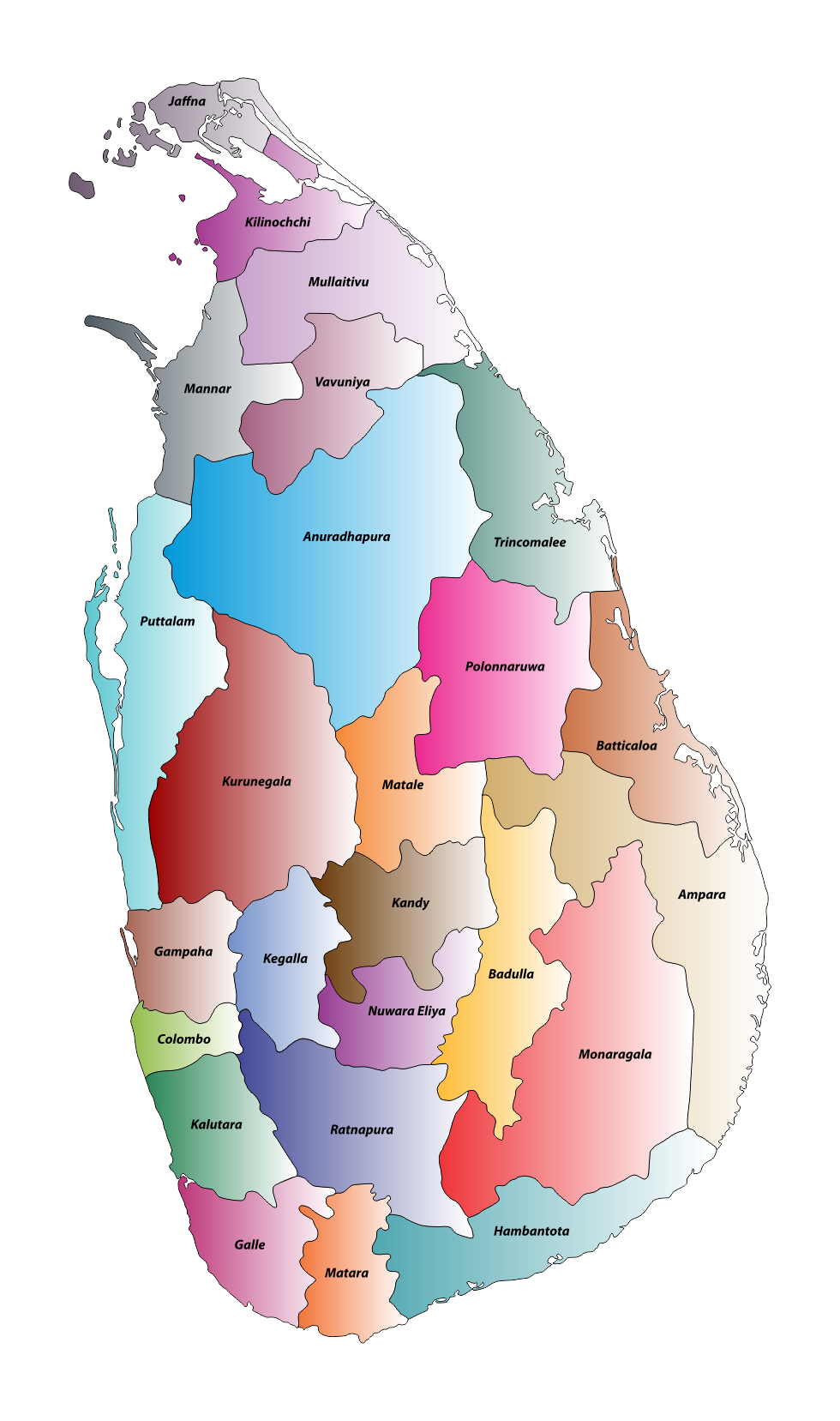
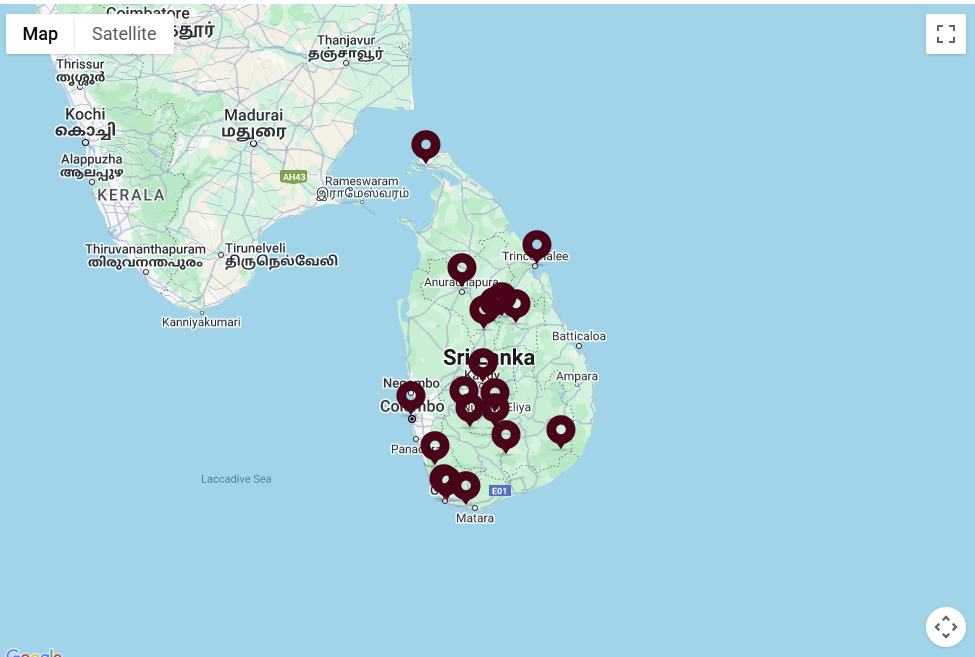
Sri Lankan Toure Map/District map


Ethnic Types


Religions in Sri Lanka

Sri Lanka is known for its diverse religious beliefs and practices. Four main religions practiced by Sri Lankans are Buddhism, Hinduism, Islam and Christianity. Here are some facts about religions in Sri Lanka according to the 2012 census provisional data.
  • Buddhism: 70.20% of Sri Lankans are Buddhists
  • Hinduism: 12.60% of Sri Lankans are Hindus
  • Islam: 9.70% of Sri Lankans are Muslims
  • Christianity: 7.40% of Sri Lankans are Christians

Weather & Seasons


Sri Lanka has a tropical climate, with two monsoons. However, there will usually be good weather somewhere on the coast! Sri Lanka’s location near to the equator means that there is a fairly constant temperature in the high twenties. Humidity is high throughout the island.
December to March has always been the best times to visit most parts of Sri Lanka, with March to September generally being the best time to visit its East Coast and the North. These coincide with the two main monsoons.
The Yala monsoon (South West monsoon) brings rain to the south and west coast and the hill country between May and August.
The Maha monsoon (North East monsoon) between October and January brings rain to the east coast, northern parts and the ancient cities areas. Sri Lanka also experiences inter-monsoonal rains across the island, usually during the months of October & November.
May, June and July are probably the hottest months of the year and a great time to hit the beach and soak in the sun.
Given its proximity to the Equator, Sri Lanka experiences a tropical monsoon climate. Consequently, understanding these weather patterns helps you strategically plan your trip.
World Weather Information Service Official Forecasts: worldweather.wmo.int/en/country

Arrival Entry Visas Service


All travellers arriving in Sri Lanka must have a visa arrangement. Visitors should apply for the official electronic travel authorisation via the official site at eta.gov.lk established in the Department of Immigration and Emigration of Sri Lanka.
Various types of Visas are listed under fees – www.eta.gov.lk/slvisa/visainfo/fees.jsp
Once approved, print out the visa confirmation. To check the status of the visa you can check it online once submitted using the reference number. eta.gov.lk
Visas applications can be submitted to Sri Lankan Missions in your country or online.
On Arrival Visas are also processed based on the nationality of the applicant Contact the Department of Immigration and Emigration for further information. Visit the website for ETA www.eta.gov.lk/slvisa/visainfo/apply.jsp

Sri Lankan Cuisine


Regarding health requirements, ensure you’re up-to-date on routine vaccines, including measles-mumps-rubella (MMR), diphtheria-tetanus-pertussis, varicella (chickenpox), polio, and flu shots. Also, consider travel insurance for emergency situations.

Emergency Contact Numbers


  • Police: 119
  • Ambulance: 1990
  • Fire: 110
  • Telephone Directory: 1212
  • Police: 011 2433333
  • Fire: 011 2422222
  • Hospital: 011 2691111
  • Colombo Tourist Information: 011 2252411
  • Kandy Tourist Information: 081 2222661
  • Department of Immigration: 011 2503629

Visiting Religious Sites


Sri Lanka’s ancient temples are spiritual treasures, but visiting them requires cultural awareness. Follow these sacred guidelines to show respect while enjoying their attractiveness.
Sri Lankan temples are peaceful places of worship that should be respected by all visitors. It’s important to be quiet (Mobile phones must be switched off to prevent disturbing devotees), avoid public displays of affection, and never point your feet toward religious icons or statues. You should also dress modestly, by covering your shoulders and knees, and always remove your shoes,hats,sunglasses before entering. A little mindfulness and respect for these traditions will allow you to have a wonderful temple experience.
Sri Lankans are very sensitive about their religion so visitors should always show appropriate respect when visiting places of worship. Sri Lankan religious places are very conscious about the dress code. Sri Lankans wear white coloured clothing when visiting a Buddhist temple. The white colour is considered to be the colour of purity. Dressing respectfully not only avoids unwanted attention but also demonstrates your appreciation for local customs.
In Sri Lanka, turning your back to a Buddha statue, even for a quick selfie, is considered highly disrespectful. Always face Buddha statues or icons directly and observe any photography restrictions at temples or cultural sites. Demonstrating respect for religious practices and avoiding insensitive behaviour ensures a smooth cultural experience for both you and the locals. In some places, the flashlight should be turned off as this could harm the colours of the paintings.
Smoking, consuming alcohol, or carrying alcohol in any religious place is not allowed. Smoking in public is a punishable offence. Mistreatment of a Buddha image is an offence and could result in a penalty. Showing a Buddha tattoo on your body is not accepted in Sri Lanka. It is considered disrespectful for the Buddha and also considered as an act of offending Buddhist sensibilities.
It is not allowed to touch the statues and paintings in temples. Some people even tap on the statues to check what material is used to build them. In historical places such as Dambulla golden Cave Temple (1st century BC), the paintings are very fragile.

Sri Lankan Language


Welcome to our guide to learning Sinhala, basic phrases for traveling Sri Lanka. Sri Lanka is renowned for being a safe and welcoming destination with warm, hospitable people rooted in Buddhist values of compassion and kindness. While incidents are rare, knowing these essential phrases ensures you can seek help when needed and communicate effectively during emergencies, medical situations, or when requiring special assistance.
As with anywhere on the world, we always think it’s a good idea to get a few useful words and sentences  before you arrive. Sinhala, one of the official languages of Sri Lanka recognized in the constitution, is deeply connected to the island’s rich Buddhist heritage and UNESCO World Heritage sites. In this article, we have compiled essential Sinhala phrases according to various situations. Sinhala is the language that’s spoken by the majority of people in Sri Lanka.
Starting a conversation with someone new for the first time can be challenging, especially when you are new to the Sinhala language. Sri Lankan people are known for their warm hospitality and friendliness, making it easier to connect with locals whether you’re visiting Buddhist temples, exploring tea plantations, markets, cultural sites or relaxing on the beaches. Proper use of pronouns shows respect for Sri Lankan culture and Buddhist traditions, making your interactions more meaningful with locals and other cultural centers. These phrases will help you to create meaningful connections during the journey.
read More

Sri Lankan Festivals & Celebrations


Sri Lanka is home to a multitude of festivals and celebrations that highlight the country’s diverse religious and cultural traditions. Some of the most popular festivals in Sri Lanka include:
  • Sinhala and Tamil New Year: Celebrated in mid-April, this festival marks the beginning of the Sri Lankan New Year.
  • Vesak festival: Celebrated in May, this festival commemorates the birth, enlightenment, and death of the Buddha.
  • Poson festival: Celebrated in June, this festival commemorates the introduction of Buddhism to Sri Lanka by Mahinda Thero in 236 BC.
  • Kandy Esala Perahera: This festival takes place in Kandy during July or August and is a colourful procession where elephants are beautifully decorated.
  • Eid al-Fitr: Celebrated by Sri Lanka’s Muslim population to mark the end of Ramadan, the Islamic holy month of fasting.
  • Navaratri: A nine-day Hindu festival that celebrates the goddess Durga with devotional songs, dances, and rituals.
  • Christmas: Christmas is an annual festival commemorating the birth of Jesus Christ, observed primarily on December 25 as a religious and cultural celebration.

Transport


Trishaw (Tuk Tuk): The simplest and cheapest way to travel short distances in Sri Lanka.
Bicycle: Often available, although not to be recommended on anything but the quietest roads, as accident rates on busy roads are high.
Scooters and Motorbikes: Particularly in the main tourist destinations, scooters are a popular way to travel and are available for hire.
Taxi: Taxis are good value for longer journeys and operate on set charges.
Bus: Cheap and plentiful, at least during the day, but often crowded and unreliable.
Train: Journeys from Colombo-Nuwara Eliya and beyond, or Colombo-Matara are a peaceful way to enjoy some spectacular scenery.
Helicopters & Sea Planes:
Helicopter and or sea plane transfers are not only a luxurious and incredible way to travel round Sri Lanka, but are also extremely time-efficient. We use four Sri Lankan aviation companies, all of which offer a reliable and comfortable service.

Attraction Cities


  • Adam’s Peak
  • Anuradhapura
  • Bentota
  • Colombo
  • Dambulla
  • Galle
  • Horton Plains
  • Jaffna Peninsula
  • Kandy
  • Kithulgala
  • Minneriya National Park
  • Mirissa
  • Ella
  • Polonnaruwa
  • Sigiriya
  • Trincomalee

Privacy Settings
We use cookies to enhance your experience while using our website. If you are using our Services via a browser you can restrict, block or remove cookies through your web browser settings. We also use content and scripts from third parties that may use tracking technologies. You can selectively provide your consent below to allow such third party embeds. For complete information about the cookies we use, data we collect and how we process them, please check our Privacy Policy
Youtube
Consent to display content from Youtube
Vimeo
Consent to display content from Vimeo
Google Maps
Consent to display content from Google
Spotify
Consent to display content from Spotify
Sound Cloud
Consent to display content from Sound